Skip to content
CozyLinenNook

How to read this siteEvery specification here is quoted from a seller listing or a care label. Nothing has been tested, measured or laundered by anyone who writes this, and where a listing leaves a number out, this site leaves it out too.

A bed is 5 layers, and every one has a wash schedule

Bottom to top, drawn to something like scale. Each band is a page, and each page answers the same three questions in the same order: does it fit, does it sleep hot, and how often does it go in the wash. Start wherever your problem is.

Mattress
Bed corner in section, drawn to scaleBed corner in section. Mattress 12 inches, protector 0.25 inches, topper 3 inches, total stack 15.25 inches. Bracketed pocket depth 14 inches. The stack stands 1.25 inches above the bracket.048121620INCHESMattressProtectorTopperPocket 14 inStack 15.25 inHatched: 1.25 in above the bracket
A 12 in mattress, a protector, and a 3 in topper, bracketed against a 14 in pocket.The hatched band is the part of the stack the stated pocket does not reach.

The corner is where it fails

A topper does not just change the feel. It changes the sheet you need.

Pocket depth is the distance from the top corner seam down to where the elastic gathers. It has to clear the mattress, plus everything you put on the mattress, plus enough left over to turn underneath and grip. The drawing on the left is a stack that stands 1.25 in above the pocket bracketed beside it, which is why the overshoot is hatched.

This is the one thing on the whole site you can actually calculate, so it gets its own tool further down and its own page at Pocket Check.

5 sizes, and what each one gets mistaken for

No federal rule fixes how big a mattress is. These are the dimensions retailers commonly list, and the third column is what this catalog actually states about depth in each size.

SizeMattress width and lengthPocket depths stated in this catalogWhere it gets confusedPage
Twin38 × 75 in14 to 15 in2 of 5 listings state oneTwin XLTwin
Twin XL38 × 80 in15 in2 of 4 listings state oneTwinTwin XL
Full54 × 75 in14 in1 of 3 listings state oneDoubleFull
Queen60 × 80 in14 to 21 in17 of 30 listings state oneOlympic queenQueen
King76 × 80 in18 in1 of 4 listings state oneCalifornia kingKing

Tool

Add up your stack and see what pocket it needs

The formula is printed underneath the buttons. It works on numbers you give it and numbers sellers published, and it will tell you when nothing in this catalog states enough depth.

Mattress thickness, inches

Topper on it

Mattress protector under the sheet

The arithmetic, in full

stack = mattress + topper + protector allowance, where the protector allowance is 0.25 in when one is present and 0 in when it is not.

required pocket = stack + 2 in, because a fitted sheet has to reach around the stack and still turn under to grip.

The 2 in allowance is this site’s assumption, not a manufacturer figure. Makers do not all measure pocket depth the same way, so treat the result as a floor rather than a promise.

Bed corner in section, drawn to scaleBed corner in section. Mattress 12 inches, protector 0.25 inches, total stack 12.25 inches. Bracketed pocket depth 14.25 inches. The bracket clears the stack by 2 inches.0481216INCHESMattressProtectorPocket 14.25 inStack 12.25 in
The bracket here is the pocket depth you need, not one a listing offers.
Stack height
12.25 in
Pocket depth needed
14.25 in

Sets in this catalog stating a depth that clears it

  • Bare Home 1800 Sheet Set, Twin XL— the listing states 6 to 15 in
  • BEDELITE Satin Sheet Set, Queen— the listing states 15 in
  • California Design Den Cotton Sateen Sheets, Queen— the listing states 16 in
  • RUVANTI Cotton Percale Sheets, Queen— the listing states 16 in
  • Bedsure PureWoven Rayon from Bamboo Sheets, Queen— the listing states 16 in
  • Queen Sheet Set, 16 in Deep Pocket, Grey— the listing states 16 in

This is arithmetic on stated numbers and nothing more. It does not say a particular sheet will fit a particular mattress, because that depends on how the maker measured. See Sizes for where the dimensions themselves get confused, and Sheets for what pocket depth is measuring in the first place.

7 materials, and what fifty washes do to each

Scroll sideways →

Cotton Percale

Percale is cotton in a plain weave: one thread over, one thread under, evenly, all the way across. That is the entire definition. It is not a quality tier and it is not a brand, and any cotton fabric woven that way can be sold under the word. What the structure gives you is a matte surface with no sheen and a hand that people describe as crisp, which is really just a fabric with nothing floating loose on the face of it.

After fifty washesPercale softens and it does so unevenly, starting where the fabric flexes most.

Cotton Sateen

Sateen is cotton woven so that several threads float across the surface before being tied down, instead of interlacing every single time. Those floats catch light, which is where the faint sheen comes from, and they present more unbroken yarn to your skin, which is where the heavier and smoother hand comes from. It is the same fiber as percale doing a different job because it was threaded differently.

After fifty washesThe sheen dulls.

Microfiber

Microfiber is polyester, extruded as filaments fine enough that the fabric behaves differently from ordinary polyester cloth. The word describes the fineness of the fiber, not the fiber itself, so a microfiber sheet is a polyester sheet with a specific manufacturing spec. Listings use the texture word far more often than they use the fiber word, and both are accurate.

After fifty washesMicrofiber pills, and it pills more visibly than cotton because the pills are polyester and they hold color.

Rayon and Viscose from Bamboo

This is rayon. Bamboo is the plant the cellulose was taken from, and the fabric that results is a regenerated cellulose fiber, not bamboo in any structural sense. The FTC has been explicit that textiles made through the viscose process have to be labeled as rayon or as viscose, with bamboo mentioned only as the source of the raw material. Listings that say bamboo alone are not describing what is in the box.

After fifty washesThis is where rayon shows its weakness.

Satin Weave

Satin is a weave in which long floats run across the surface with very few tie-down points, producing the highest shine of any common construction. It says nothing about what the threads are made of. Silk satin, polyester satin and nylon satin are all satin. In bedding the fabric is most often a polyester filament, because filament is what holds that particular shine, but that is a general fact about the category and not a statement about any specific set. The one satin listing in this catalog names the weave and does not name the fiber, so this site records the fiber as unstated.

After fifty washesThe floats are the whole problem.

Memory Foam

Memory foam is polyurethane foam modified to be viscoelastic, meaning it deforms slowly under load and returns slowly when the load comes off. That delay is the entire product. It shows up on this site in two very different forms: solid slabs cut for toppers, and cross-cut or shredded pieces packed into pillow shells where the fill can be added or taken out.

After fifty washesThe question does not apply to the foam, because the foam has not been washed fifty times and must not be.

Down Alternative Fill

Down alternative is polyester fiberfill. The name is a comparison to a different product rather than a description of this one, and it appears on both pillows and comforters throughout this catalog. Some of it is loose staple fiber, some is spun into small clusters meant to behave a little more like down does, and listings almost never say which.

After fifty washesFiberfill clumps.

What goes in the wash, and how often

The care label on your item beats every line of this. These are general intervals for a category, and the last column is the one worth reading twice.

ItemWash how oftenWatch out forReplace when
PillowcasesWeeklyYellowing along the fold where the head rests, and a fabric that feels slick rather than clean after washing, which usually means detergent is not rinsing out.When the fabric has thinned enough to see through at the fold, or when a stain has set through repeated washing.
Fitted and flat sheetsWeeklyPilling where a forearm rubs, elastic gone slack at one corner, and thinning at the foot of the flat sheet where heels do the work.When the fitted sheet will not hold a corner through the night, or when a thin patch has opened into a hole.
Mattress protectorEvery 2 months, and immediately after any spillA crackling sound, stiff patches, and elastic that no longer snaps back at the corners.When it crackles, when liquid reaches the mattress through it, or when the corners no longer stay put.
Comforter or duvet insertEvery 3 to 4 months under a flat sheet or duvet cover; every 4 to 6 weeks if it is the layer against youFill drifting to one end, cold spots you can feel through the cover, and quilting stitches that have let go along a line.When the fill no longer redistributes after a wash and a shake, or when the shell has worn through at a seam.
PillowsPolyester fill every 3 to 4 months if the label allows. Foam pillows: cover only, on the sheet scheduleA pillow that folds in half and stays folded, lumps that will not knead out, and a shell yellowed all the way through.When it no longer springs back, or when the fill has felted into separate masses.
Mattress topperRemovable cover on the sheet schedule. Foam itself: spot clean onlyA dip that stays after a day off the bed, grit inside the cover from crumbling edges, and a cover that has shrunk and no longer stretches back over the slab.When the dip does not recover, or when the foam has started to shed.

The full version, grouped by layer and with every prohibition in one place, is on Care Calendar.

57
Listings read

Each one recorded for what it states and what it leaves out.

5
Categories

Each with one job written out, and a ranking that follows it.

12
Layer and material pages

5 layers of the stack and 7 fabrics and fills.

2026
Written in

Listings change. Corrections are welcome and they get made.

The five layers in order

Layer 1

Mattress Protector

A protector is a fitted skin that goes straight onto the mattress and stays there. Its whole job is to stop liquid, dust and body oil from reaching foam or ticking you cannot wash. In a linen closet it is the item people forget exists until the day it earns its keep.

WashesEvery two months, and immediately after any spill.

Layer 2

Mattress Topper

A topper sits on the mattress and changes what the surface feels like without replacing anything. It is also the single item most likely to break the rest of your bedding, because it adds two to four inches to a stack your fitted sheets were bought for. It is the layer with the most rules attached to it and the fewest of them printed on the front of the bag.

WashesThe cover, if it comes off, on the same schedule as your sheets. The foam itself, never, unless the manufacturer says otherwise on the label.

Layer 3

Sheets

Sheets are the layer you actually touch all night, and the only one in the stack that has to grip something. A flat sheet and pillowcases are cloth rectangles and behave like it. A fitted sheet is a piece of engineering with elastic in it, and it is the item in a linen closet that gets sent back most often.

WashesWeekly for the sheet you sleep on, and weekly for pillowcases.

Layer 4

Comforter

A comforter is a quilted bag of fill that covers the bed. It is the layer most often bought for how it looks, and the layer whose one genuinely comparable number is printed least often. It is also the bulkiest thing you will ever try to fit in a home washing machine, which is most of what makes it difficult.

WashesEvery three to four months if it is under a flat sheet or inside a duvet cover. Every four to six weeks if it is the layer against you.

Layer 5

Pillow

A pillow holds a shape between your head and the mattress for eight hours, and then has to still be that shape tomorrow. It absorbs more of you than anything else on the bed. It is also the item where listing language runs furthest ahead of anything measurable, which is why this page spends more time on words than on products.

WashesPolyester fill pillows every three to four months, if the label allows it. Foam pillows never go in a machine; the removable cover does, and the foam does not.

Tool

Turn that calendar into one for your bed

Pick what is actually on it. The intervals shorten if a pet sleeps up there, and the arithmetic is printed underneath.

The care label sewn into the item beats everything on this page. Every schedule below is a general guideline written for a whole category, and the manufacturer wrote theirs for the exact thing you own. Where the two disagree, follow the label.

What is on the bed

A pet sleeps on the bed

Someone in the house wants bedding washed more often

This shortens the intervals and nothing else. It is a preference setting. This site makes no claim about allergies, asthma, dust or any health outcome, and a shorter wash cycle is not offered here as a treatment for anything.

  • Pillowcases

    about every 7 days

    BaselineWeekly

    Watch forYellowing along the fold where the head rests, and a fabric that feels slick rather than clean after washing, which usually means detergent is not rinsing out.

    Replace whenWhen the fabric has thinned enough to see through at the fold, or when a stain has set through repeated washing.

    • Do not bleach a colored or a finished case unless the label allows it. Optical brighteners and resin finishes react badly and the damage is not reversible.

    More on this layer: Pillow

  • Fitted and flat sheets

    about every 7 days

    BaselineWeekly

    Watch forPilling where a forearm rubs, elastic gone slack at one corner, and thinning at the foot of the flat sheet where heels do the work.

    Replace whenWhen the fitted sheet will not hold a corner through the night, or when a thin patch has opened into a hole.

    • Do not wash rayon or viscose sheets hot. The fiber is at its weakest wet, and heat plus agitation is what puts holes in them before they look worn.
    • Do not dry a resin-finished wrinkle-free sheet on high heat repeatedly. The finish is what makes it smooth, and heat degrades it.

    More on this layer: Sheets

  • Comforter or duvet insert

    about every 105 days

    BaselineEvery 3 to 4 months under a flat sheet or duvet cover; every 4 to 6 weeks if it is the layer against you

    Watch forFill drifting to one end, cold spots you can feel through the cover, and quilting stitches that have let go along a line.

    Replace whenWhen the fill no longer redistributes after a wash and a shake, or when the shell has worn through at a seam.

    • Do not cram a comforter into a machine that cannot turn it. A comforter that does not tumble does not get washed, it gets soaked, and the weight can damage both the item and the machine.
    • Do not take a comforter out of the dryer while the middle is still damp. Fill that dries folded in on itself mildews.

    More on this layer: Comforter

How the intervals are worked out

days = baseline interval for the item, multiplied by 0.5 if a pet sleeps on the bed, multiplied by 0.75 if you asked for more frequent washing, then rounded and floored at 3 days.

The baselines are general guidelines for a category, written from ordinary laundry practice. They are not manufacturer instructions and they are not a health recommendation. The full calendar, with everything that must never go in a machine, is on Care Calendar.

Six plain answers

Why does my fitted sheet come off one corner?

Because the pocket ran out before the stack did. Add the mattress, the topper and the protector together, then leave two inches for the sheet to turn under. If the stated pocket depth only equals your total, it is already too small.

Is a 1000 thread count sheet better than a 400?

No. Counting each ply of a multi-ply yarn as a separate thread doubles the number without changing the cloth. Weave and fiber length decide how a sheet feels; the count decides nothing.

Can I wash a memory foam pillow?

Not unless the manufacturer says so. Foam soaks up many times its weight in water, will not release it, and tears apart under that weight while wet. Wash the cover and spot clean the foam.

What does bamboo bedding actually mean?

That bamboo was the raw material for a rayon. The finished fiber is rayon or viscose, which is what the FTC requires it to be called, and it behaves like rayon rather than like a plant.

How often does a comforter need washing?

Every three to four months under a flat sheet or inside a duvet cover, and every four to six weeks if it is the layer touching you. The label on the item beats both of those.

Does a certification mean it is good quality?

No. Every mark on these listings is a screening for particular substances or emissions. None of them tests durability, comfort, or whether the fiber on the label is what is in the box.

DisclosureLinks to Amazon on this page are affiliate links. If you buy through one, this site may earn a commission at no extra cost to you. It does not change what is written here, and no seller has paid for a place in any list.

One from each of the 5 categories

5 items, one per category, each the one whose listing states the most about doing that category’s job. The badge says which figure earned it.

Deepest pocket that also states its elastic

Pocket and elastic 16 in pocket with elastic all around

California Design Den Cotton Sateen Sheets, Queen

California Design Den Cotton Sateen Sheets, Queen

The listing states100% cotton sateen · 16 in

Sheet & Pillowcase Sets

Check it on Amazon

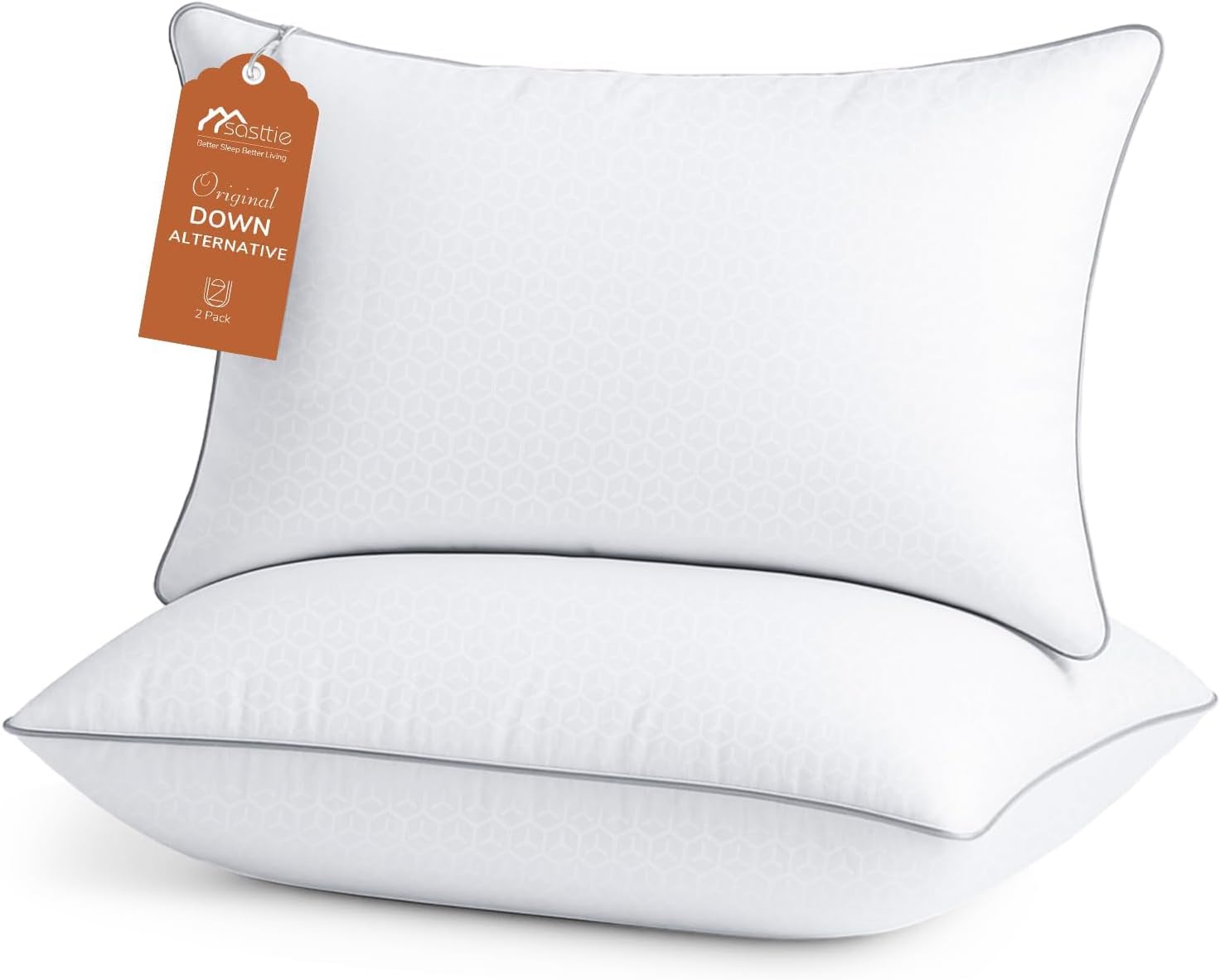
Only pillow listing that states machine washable

Washability Machine washable, stated on the listing

Sasttie Firm Pillows, Queen, 2-pack

Sasttie Firm Pillows, Queen, 2-pack

The listing statesdown alternative fill

Bed Pillows

Check it on Amazon

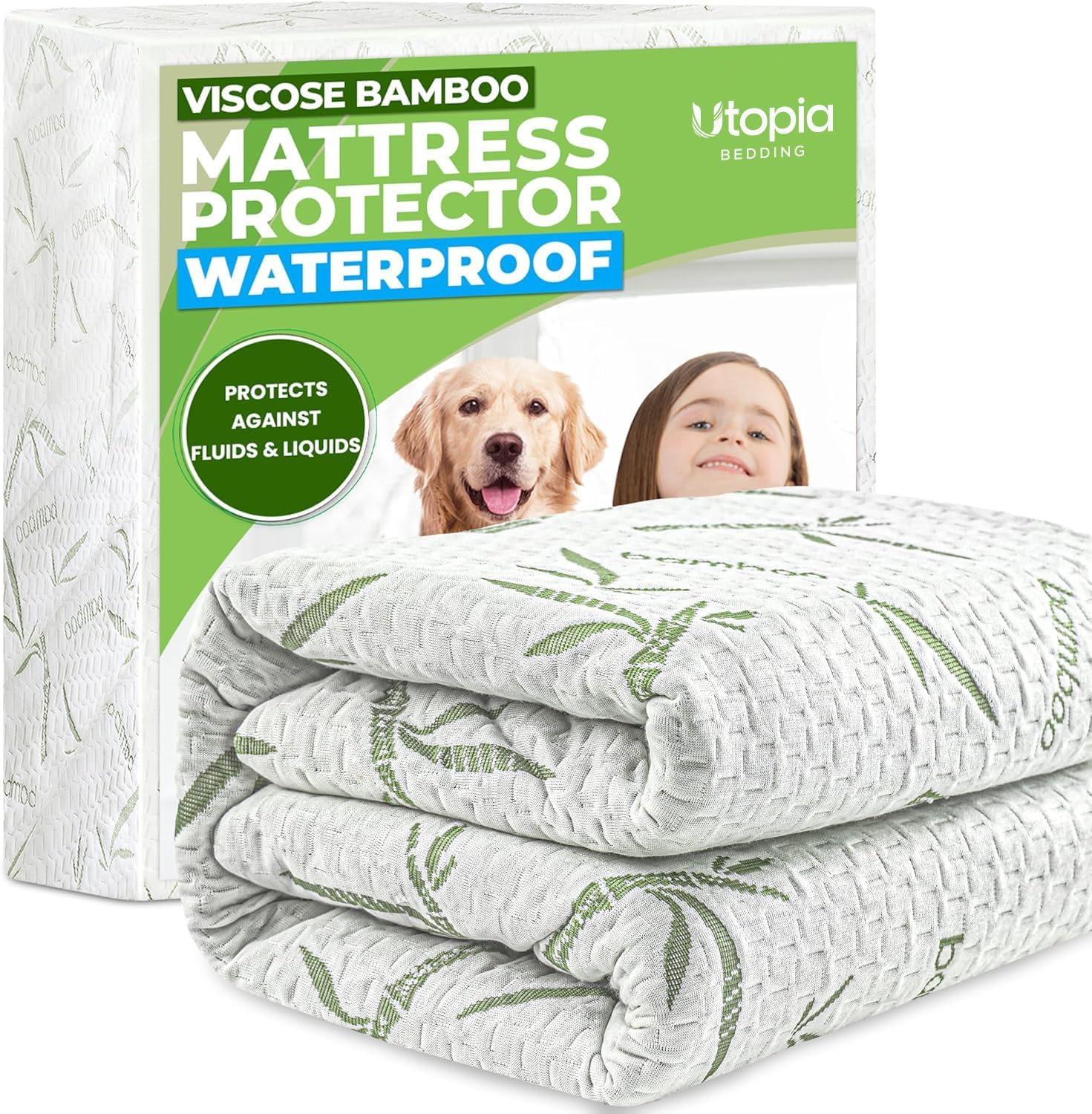
Only protector naming its fiber and a pocket depth

Fiber and pocket Viscose from bamboo, with a 17 in pocket

Utopia Bedding Bamboo Waterproof Protector, Queen

Utopia Bedding Bamboo Waterproof Protector, Queen

The listing statesviscose from bamboo · 17 in

Mattress Protectors

Check it on Amazon

Only foam topper that states a removable cover

Cleaning route Removable cover, stated on the listing

SINWEEK 3 Inch Gel Memory Foam Topper, Twin XL

SINWEEK 3 Inch Gel Memory Foam Topper, Twin XL

The listing statesgel memory foam

Mattress Toppers

Check it on Amazon

Thread count stopped meaning anything

Cotton Sateen

A thread count is threads per square inch, which was a reasonable proxy for density back when a thread was a thread. Once manufacturers started counting each ply inside a multi-ply yarn separately, the number could be doubled without changing the cloth at all. What actually decides how a sheet behaves is the length of the fibers being spun and the weave holding them together, and neither of those appears in the number. One sheet listing in this catalog states a thread count. It is not the reason that set ranks where it does.

Cooling is a word, not a specification

Comforter

It appears on sheets, on pillows, on comforters and on foam, and in none of those places does it carry a unit, a test method or a number. Some of what sits underneath it is real: a spacer mesh does move more air than a flat laminate, and holes cut through a foam slab are holes you can see. But the word itself is doing sales work, and it is applied just as freely to a polyester fill that holds warmth as to a fabric that moves moisture. Where a listing uses it, this site records it as seller language and looks for a measurement instead.

Sometimes the listing never says what it is

Sheet & Pillowcase Sets

The most common gap on a bedding listing is not an exaggeration, it is an absence. Several sheet sets in this catalog never give a generic fiber name at all: some say nothing about content, and others use a word that names a weave or a filament fineness rather than a fiber. A certification mark, a wrinkle-free finish and a deep pocket claim can all appear on a listing that has still not told you what the fabric is. This site leaves those gaps visible instead of filling them in, because filling them in would make the page look complete and make it wrong.

How this site is written

  1. Nothing has been tested. Every specification is quoted from a seller listing or from a published rule, and it is labeled as such wherever it appears.
  2. Where a listing does not state something, this site records nothing. 6 sheet sets here never give a generic fiber name, and none of them is attached to a material page.
  3. Every count on the site is computed from the data that builds it. If a heading says how many items are in a group, it counted them.
  4. Health-adjacent claims on listings are reported as the seller’s words. This site makes no claim about pain, allergies, skin or hair, and it never will.
  5. Only 3 of the comforter listings state a fill weight. Rather than fill the gap with adjectives, the pages say which ones did and rank accordingly.
  6. Nothing in this catalog is intended for an infant sleep surface, and that block sits above every product link on this page rather than below it.

Disclosure, againAs an Amazon Associate this site earns from qualifying purchases. Product details come from the seller listings and are described as claims, not as findings. Nothing here has been tested.

More on the reasoning is at About, and the vocabulary is unpicked at Glossary.